
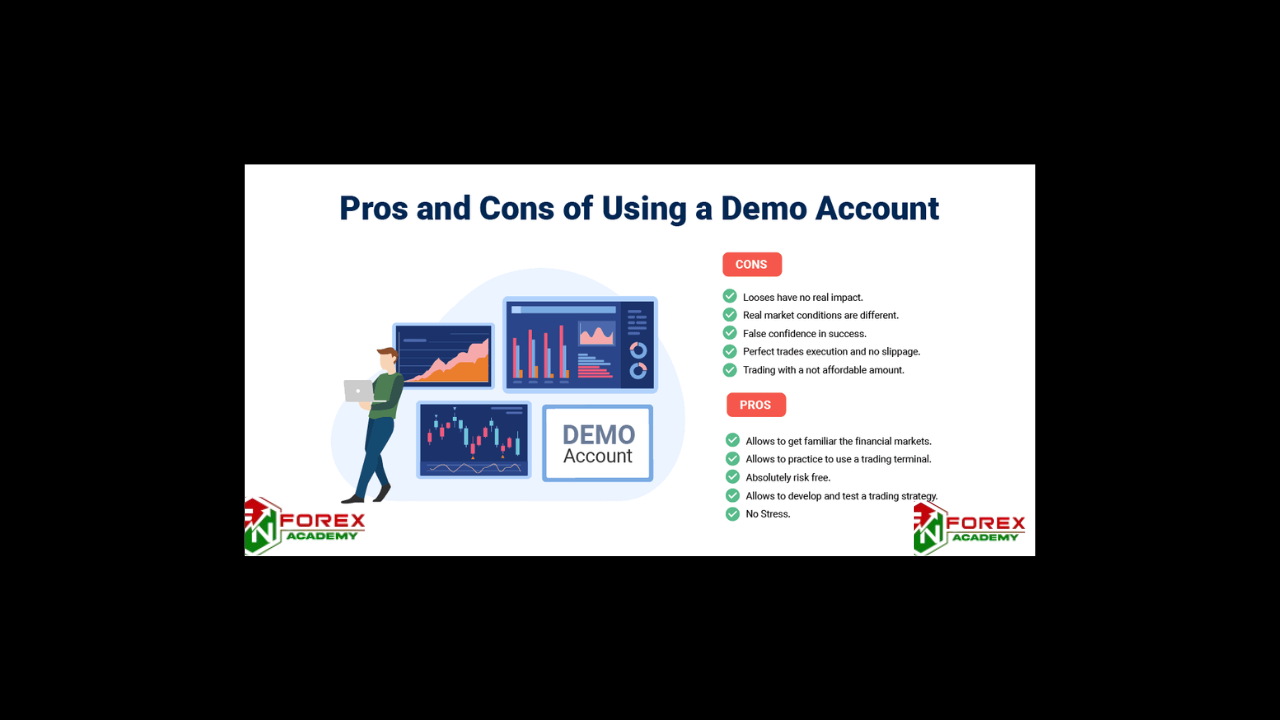
Demo accounts are often the first step in a trader’s journey — and when used correctly, they can build the foundation for long-term success in the forex market. However, many beginners either misuse demo accounts or fail to transition properly from demo to live trading. In this article, we’ll break down what a demo account is, how it works, its benefits and disadvantages, and how to use it effectively.
💡 What is a Demo Account?
A demo account is a simulated trading platform offered by forex brokers that allows users to trade the markets with virtual money. It replicates live market conditions, giving traders the chance to practice strategies, understand the trading platform, and test tools — all without risking real capital.
“Every successful trader today started somewhere — for most, it was a demo account. It’s where you build confidence before facing real market pressure.”
— FNFOREX, The Psychology of Trading
✅ Benefits of Using a Demo Account
1. Risk-Free Practice
You can explore forex trading without fear of losing real money. It allows you to make mistakes and learn from them.
2. Platform Familiarization
You get comfortable with trading platforms like MT4 or MT5 — understanding how to place trades, set stop-loss/take-profit levels, and analyze charts.
3. Strategy Testing
Demo accounts are ideal for testing new trading strategies before applying them in real markets.
4. Understanding Market Dynamics
It helps you observe how currency pairs behave under different market conditions (news events, volatility spikes, etc.).
5. Building Discipline
Practicing with a demo account encourages traders to follow a structured plan — an essential skill when transitioning to a real account.
⚠️ Disadvantages of Demo Trading
While demo accounts are extremely useful, they come with limitations:
1. No Emotional Involvement
Since no real money is at stake, traders often don’t experience the emotional pressure that comes with real losses or gains.
“The psychology of trading changes when real money is involved. That’s why demo results don’t always reflect live performance.”
— FNFOREX, The Psychology of Loss
2. Overconfidence
Some traders develop unrealistic confidence after success in a demo environment and end up overleveraging in live trading.
3. Unrealistic Execution
Demo accounts may not reflect live spreads, slippage, or execution delays, especially during high-volatility periods.
📘 How to Use a Demo Account Effectively
To get the maximum benefit from demo trading, follow these best practices:
1. Treat It Like Real Money
Set a virtual balance that mirrors what you intend to trade with in real life. Don’t open positions just for fun — trade with purpose and discipline.
2. Have a Trading Plan
Use the demo account to develop and test a complete trading plan: entry criteria, exit strategy, risk management, and trade journaling.
Try using this Position Size Calculator from FNFOREX to determine how much you should risk per trade — even in demo mode.
3. Track Your Progress
Maintain a trading journal to analyze your winning and losing trades. This will help refine your strategy and improve consistency.
4. Simulate Real Conditions
Don’t reset the demo account balance when you lose. Trade through drawdowns to simulate real emotional pressure and build mental resilience.
5. Know When to Move to Live
Once you’ve demonstrated consistent profitability and emotional control in demo trading over a few weeks or months, consider transitioning to a small live account.
🔁 Transitioning from Demo to Live Trading
The switch to real trading should be gradual:
- Start with low-risk trades using micro or cent accounts.
- Trade only with money you can afford to lose.
- Keep emotions in check and follow your demo-tested strategy.
Learn more on how to avoid common pitfalls as a new forex trader before going live.
🧠 Final Thoughts
Demo accounts are more than a training tool — they are a trader’s simulation ground for success. When used intentionally and with discipline, they help traders develop skills, test strategies, and build confidence.
But remember: real trading involves real emotions and real risks. Your job is to bridge the gap between demo performance and live execution with psychological preparedness and structured practice.
🖇 Internal Links for Further Learning:
- The Psychology of Trading
- The Psychology of Loss: How to Cope with Losing Trades
- How to Avoid Common Pitfalls as a New Forex Trader
- Position Size Calculator
- Can You Really Grow a Small Forex Account?